Causes of Global Warming
Global Warming
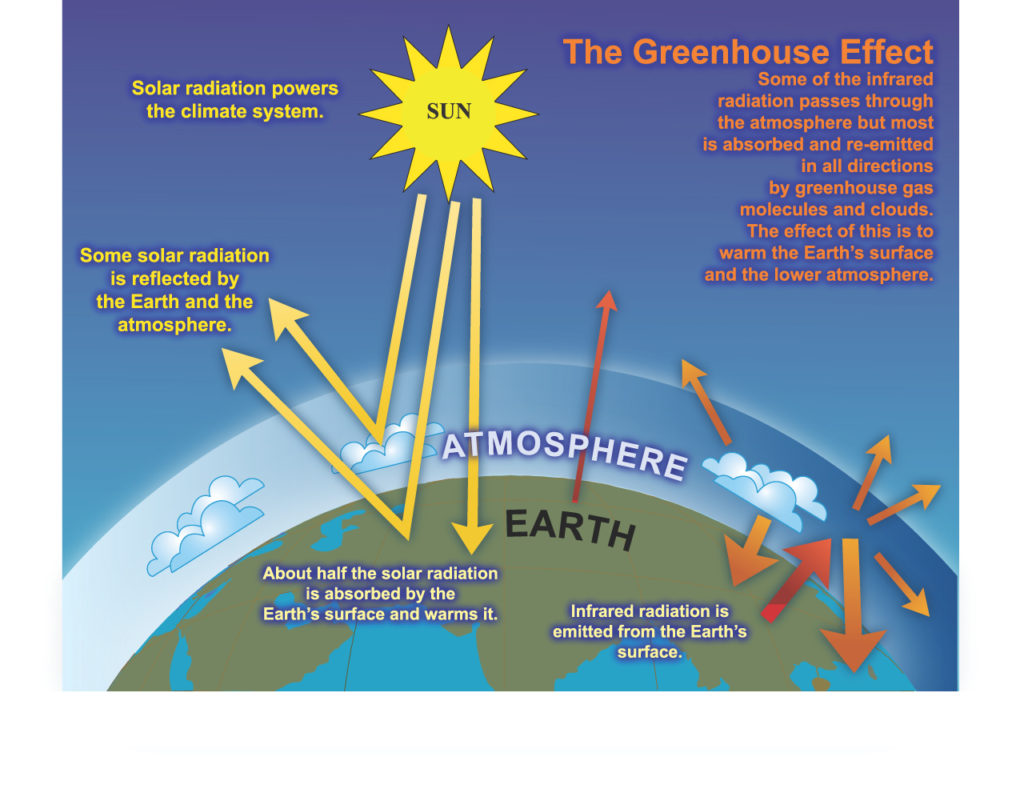
Greenhouse Effect (Image Source: The Intergovernmental Panel on
Climate Change)
As already explained in the earlier post, global warming is a product of increased levels of greenhouse gases in the atmosphere which serve to trap/absorb heat from the sun, preventing the heat from escaping into the outer space thereby resulting in increasing global temperature. This process is what is referred to as Greenhouse Effect and the gases that contribute to it are called greenhouse gases which include water vapor (H2O), carbon dioxide (CO2), methane (CH4), nitrous oxide (N2O), and ozone (O3).
As already explained in the earlier post, global warming is a product of increased levels of greenhouse gases in the atmosphere which serve to trap/absorb heat from the sun, preventing the heat from escaping into the outer space thereby resulting in increasing global temperature. This process is what is referred to as Greenhouse Effect and the gases that contribute to it are called greenhouse gases which include water vapor (H2O), carbon dioxide (CO2), methane (CH4), nitrous oxide (N2O), and ozone (O3).
According to Intergovernmental Panel
on Climate Change, human activities that contribute to the emission of these
gases into the atmosphere are the major causes of global warming. These activities
include burning of fossil fuels, cutting down of rainforests, mining, commercial
agriculture, and farming livestock.
Burning of Fossil Fuels

Industrial Emission (Image source:Natural Resources Defense Council
Burning of fossil fuels is one of the
major causes of greenhouse gases emissions. While fossil fuels such coal,
oil, and gas supply about 80
percent of the world’s energy, when they are burned, they release gases such as
carbon dioxide and nitrous oxide. These gases escape into the atmosphere where
they accumulate and form a blanket around the planet thereby resulting in
greenhouse effect. Some of the activities that involve burning of fossil fuels include
driving vehicles, ships, boats, motorcycles, and operating heavy industrial
machineries. Christopher Nunez (2019) of National Geographic reports that Carbon
dioxide emissions from burning of fossil fuels account for 44 percent of the
world total, and it's the biggest single source of the global temperature
increase above pre-industrial levels. Carbon Brief, a UK-based website covering
the latest developments in climate science, climate policy, and energy policy, on
the other hand notes that despite calls to reduce use of fossil fuels, CO2 emissions from fossil
fuels and industry grew by 2.7% in 2018; this was the largest increase in seven
years. Worryingly, it is expected that 2019 is also likely to record an
increase in CO2 emissions.
Cutting Down of Rainforests
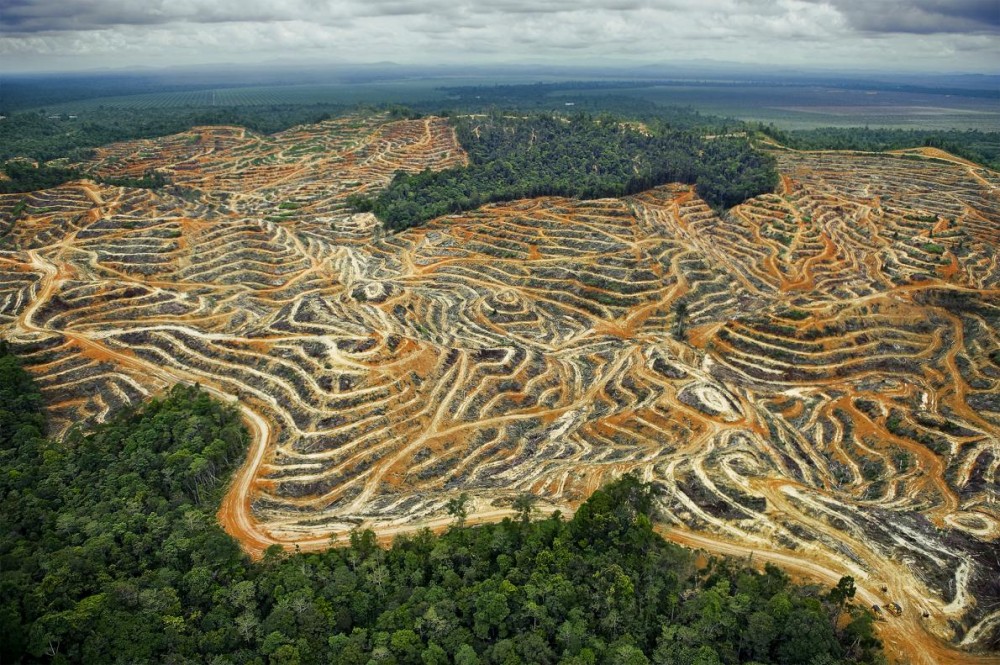
Deforestation (Image Source:www.industrytap.com/)
Trees
are very important in keeping the level of carbon dioxide in the atmosphere at
natural levels thanks to the fact that they take in CO2 and release oxygen into
the atmosphere. Tropical rainforests are very vital in this process because of
their large sizes which serve to increase the amount of C02 they take out of
the atmosphere. However, when these forests are cut down, large amounts of CO2
build up in the atmosphere as there are fewer trees taking it out. Burning of
these trees and forests also releases carbon dioxide that were stored in the
trees into the atmosphere. The end results of these activities are increase in
carbon emission and consequently, global warming. Many tropical forests are
being cleared for various reasons including beef production, crop farming, urban
expansion, and settlement. Deforestation is thus a major issue that must be
effectively addressed. According to National Geographic between 1990 and 2016,
the world lost 502,000 square miles (1.3 million square kilometers) of forest,
while 17 percent of the Amazonian rainforest has been destroyed over the past
50 years.
Commercial Agriculture
Commercial Agriculture
Livestock farming (Image Source: weebly.com)
Commercial
agriculture or farming of crops and animals is also a major cause of global
warming because of the greenhouse gases that they release into the atmosphere.
According to European Environment Agency, farming in particular releases significant amounts of methane
and nitrous oxide, two powerful greenhouse gases.
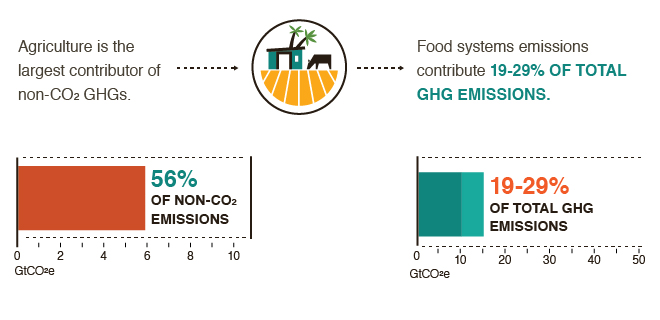
(Image Source: https://ccafs.cgiar.org/)
Methane is produced by
livestock during digestion due to enteric fermentation and is released via
belches. Methane can also escape from stored manure and organic waste in
landfills. Nitrous oxide emissions on the other hand are an indirect product of
organic and mineral nitrogen fertilizers. Commercial agriculture is carried out
in large scales thereby increasing significance of greenhouse gases emitted
into the atmosphere. Besides greenhouse gas emission, commercial agriculture
has also significantly contributed to destruction of tropical forests leading to
increased accumulation of CO2 in the atmosphere and consequently accelerating the
rate of global warming.
Other Activities
There
are also minor activities that contributes to greenhouse emissions. These activities
include use of products such as air fresheners, perfumes, and vacuum cleaners
which contain chlorofluorocarbons. Other activities such as burning of plastic
wastes also release CO2 into the atmosphere thereby contributing to the problem
of global warming.
In
order to effectively address the problem of global warming, we must thus find
ways to reduce emission of greenhouse gases. This will entail moving away from
use of fossil fuels and adapting green energy sources, limiting cutting down of
forests and planting of more trees, and reducing commercial farming and use of fertilizers
in agriculture. We must also stop usage of products that contain chlorofluorocarbons
and ban usage of plastics.
Sources
European Commission. “Causes of climate change.” Available at
https://ec.europa.eu/clima/change/causes_en
European Environment Agency. “Agriculture and climate change.” June 30, 2015. Available at
https://www.eea.europa.eu/signals/signals-2015/articles/agriculture-and-climate-change.
Accessed December 23, 2019
Intergovernmental Panel on Climate Change. Fifth Assessment Report, 2014. Available at http://ipcc.ch/pdf/assessment-report/ar5/syr/AR5_SYR_FINAL_SPM.pdf
Nunez, C. (2019). “Deforestation explained.” National Geographic.
Available at https://www.nationalgeographic.com/environment/global-warming/deforestation/
Nunez, C. (2019). “Fossil fuels, explained.” National
Geographic. Available at https://www.nationalgeographic.com/environment/energy/reference/fossil-fuels/

Comments
Post a Comment